Sunday, February 8, 2015

What Do We Do About Academic Dishonesty?

Earlier this week I found myself reading a post from an educator, in an online forum, that was looking for "tips/tricks/advice/defenses" to use against cheating in an online environment (Edmodo). This educator clearly was looking for an IT solution that would be used in the future in conjunction with the consequence/deterrent that this particular educator labeled "the big fat zero." Lots of IT tips and tricks were provided. As I read through the posted solutions I couldn't help but wonder about what led up to this incident, and what would ultimately be learned from it. I didn't offer up a tech solution to this educator, instead I pushed back a bit. You can probably imagine how well my comment was received.


I haven't always felt this way, but I have come to the realization that we are at least partly responsible for the cheating student. We need to acknowledge the role that we play. Do I condone academic dishonesty? Certainly not! But I do recognize if there is a student in my class that is cheating, I am at least part of the reason why. Firstly, the student was not able to answer the question on their own, or clearly did not have confidence in their abilities to answer the question correctly. Secondly, the climate of integrity in the classroom was lacking. Perhaps the student did not put forth extra effort preparing prior to the assessment, but did I do all that I could to ensure that they would be able to successfully complete the task? Did I motivate the student to put forth extra effort? What is my relationship with this particular student? If the student was struggling, did they see me as someone that would be approachable and willing to help? Did I provide feedback along the way to help the student gauge their ability to meet the standard? I recently was introduced to some research that indicated that the most powerful feedback was comments. Not grades, not grades and comments, but comments written and verbal. Did I take the time to provide meaningful feedback? Is my content accessible and engaging? Do my students believe that I believe in them, and their ability to meet high expectations? How could I change my practices? So, in short I would first start with myself, and my teaching practices. I am not excusing the student's behavior, and certainly there should be consequences for unethical behavior, but I see this as a teachable moment for both of us.

Academic dishonesty is a big deal. Quite frankly, dishonesty in general is a big deal. But, for the purposes of this blog we'll keep it tied to academics. By assigning a grade of zero alone, to this assessment have we have actually impacted the student in a significant enough way as to ultimately change their behavior. Will this encourage the student to work harder, spend more time engaging with the content and deepen their understanding? Will it leave a lasting impression so that the student doesn't make this regrettable choice again? I have my doubts. We need to see these situations as teachable moments. We are in fact, teachers after all. We are not called to teach content in isolation, we teach students (and hopefully learn from them, but that's a blog for another day). One of the aspects of teaching students has to be ethical behavior, how many school missions have you read that include the words "to grow into productive citizens" or something along those lines? This is not some magical process. We need to model, and in some cases explicitly teach ethical behavior.


Friday, February 6, 2015

Standing Up For Our Schools

The Honorable Andrew M. Cuomo
Governor of New York State
NYS State Capitol Building
Albany, NY 12224
February 6th, 2015


Dear Governor Cuomo,

I am writing to you with the intention of inviting you to visit our classroom. You see sir, I feel that there is much that our third graders could teach you, and share with you. Our students are truly inspiring, and I have no doubt that you would find the visit rewarding.

Governor, spending some time in our classroom you would learn the importance we place on developing the well being of the whole child. You would notice how we encourage empathy and understanding. You would see that we value collaboration, and working together to solve problems. And, that in spite of significant challenges we persevere. Our students would tell you that building each other up and helping one another is important. That our mutual agreements of being respectful, responsible and safe help to create an environment that is conducive to learning and growing. You might even be surprised to learn about the diversity in the background, circumstances, and abilities of our students and how we differentiate instruction in order to meet their unique academic needs, and how we also provide support for their physical and emotional needs.  We are a community of learners: students, teachers, and families working together.

We look forward to the opportunity to have you as our special guest at your earliest convenience.

Respectfully yours,

Christina Luce
3rd Grade Teacher
Nate Perry Elementary
Liverpool, NY

P.S. Here are some photos of our learning community. We hope you enjoy them!


Saturday, January 31, 2015

Leader or Follower?

"Do you want to be a leader, or do you want to be a follower?" A provocative question, that I am sure was designed to elicit a resounding, "LEADER!" But, the reality is that we are called to be both. The reason is quite simple, we're not perfect. Perfection is an illusion. So if we can concede that we're not perfect, that we don't have all the answers, then we must concede too, that at times we are in fact followers.

Thursday, January 8, 2015

Leadership Qualities According to 3rd Graders

For the past year and a half, I have been immersed in discussion and reflection around educational leadership, and leadership styles. I've looked at the role of teacher leaders, building leaders, and district leaders. I've read amazing blog posts, articles and books. I feel like I've learned a lot. But I think one of the experiences that is really going to stick with me, is an experience that I had in my own classroom this week.

It just so happened that one of the follow up questions in our anthology (HMH Journeys) asked students to reflect on the qualities that are important in a leader. So out of the mouths of babes (3rd graders), a list of some important leadership qualities:


  • Leaders need to be honest. They need to tell the truth and not lie to people.
  • Leaders need to be kind.
  • Leaders need to do the right thing.
  • Leaders need to sacrifice.
  • Leaders need to share with others.
  • Leaders need to care about others.
  • Leaders shouldn't yell.
  • Leaders need to be confident.
  • Leaders need to be prepared for anything.
  • Leaders need to have a lot of skills.
  • Leaders need to be able to give good advice.
  • Leaders can't be all about themselves.
  • Leaders need to be good sports.

Yeah, I kind of think they nailed it. Next time you're wondering what it takes or means to be a leader, ask your students - they have incredible insight.

Embracing "The Not Perfect Hat Club"

A little while back I had a really interesting conversation with Jena Ball (@JenaiaMorane). She shared a new project that she, and her Critterkin crew were working on. The project she described is The Not Perfect Hat Club. More than a club, in the traditional sense, to me it seems more of an adoption of an attitude or a way of thinking and being. It is something that will assist both children and adults in addressing what is becoming an over-emphasis on achievement and attainment, and quite frankly the perpetuation of perfectionism. It will help individuals focus on the journey rather than the outcome, to recognize and value their talents and the talents of others, and to embrace the often uncomfortable feelings associated with challenge. 

I am excited to see this project unfold both as an educator, and as a mom. I want our children to know that learning is messy, and that while striving to do one's best is important, perfection is not. I want our children to appreciate the journey, to revel in the process, rather than limit their focus to the outcome or product. I want our children to grow up with curiosity and wonder, and to understand that creativity is within all of us, and can be expressed in a multitude of ways. As adults, I hope that this project will help us develop the courage to take risks, to try something new and to be vulnerable. Together, we are "perfectly, not perfect."

To learn more about this project, and to join The Not Perfect Hat Club check out:
#NotPerfectHatClub


Saturday, December 20, 2014

Agape

I have been out of school for a few days. It was unexpected. Some say that it was the Lord's way of telling me I needed to slow down. Perhaps, they are right. I haven't done much in the past few days but lay in bed or on the couch, watch my fill of movies and nap. I've also had time to think, and to reflect. 


I may have watched the movie "Love Actually" a few times, well, more than a few truthfully. It's my weakness, and I'm happy to admit it. One of my absolute favorite parts of the movie is the monologue at the beginning of the film. Well done, Richard Curtis, Hugh Grant and those unsuspecting travelers and loved ones! This very poignant beginning of the film highlights the one very important truth, "love actually is, all around."


The question is, do we take the time to recognize it, in all its myriad of forms on a daily basis? Over the course of the day, where do you see evidence of love? Agape is described throughout the New Testament as the fatherly love of God for us, and our reciprocal love for God. The term also extends to the love that we share for one another. Some of my favorite verses come from 1 Corinthians. Dust off your bible, and turn to 1 Corinthians and you will find much to do about love. Here are but two:

Love never fails; 
but if there are gifts of prophecy, they will be done away;
If there are tongues, they will cease; 
If there is knowledge, it will be done away.
1 Corinthians 13:8

Let all that you do be done in love.
1 Corinthians 16:14

If you are wondering what on earth this has to do with education and leadership, I beg your indulgence. I believe there is a direct correlation. At our most basic level, we desire to be known by another. If we make the time in our classrooms, in our schools, in our districts to know one another, to love one another, the power of that love will be great. It will allow us to do more, and to be more than we dared to dream of.

In a world that is in constant pursuit of the best, the brightest, the most glowing achievements, we often take for granted the most powerful ingredient of all - love. Without it, I argue there is less opportunity for innovation and creativity to take hold; there is far less risk-taking and sharing of ideas. What I propose then, is this - we slow down. Take the time, indeed make the time to build relationships, to care, to nurture, to really love one another, and see where it takes us. I have a sneaking suspicion that it will take us farther than we dared to imagine.

The Lord bless you, and keep you;
The Lord make His face shine on you.
And be gracious to you,
The Lord lift up His countenance,
And give you peace.
Numbers 6:24-26


Saturday, December 13, 2014

Pride and Prejudice - Lessons for Leadership


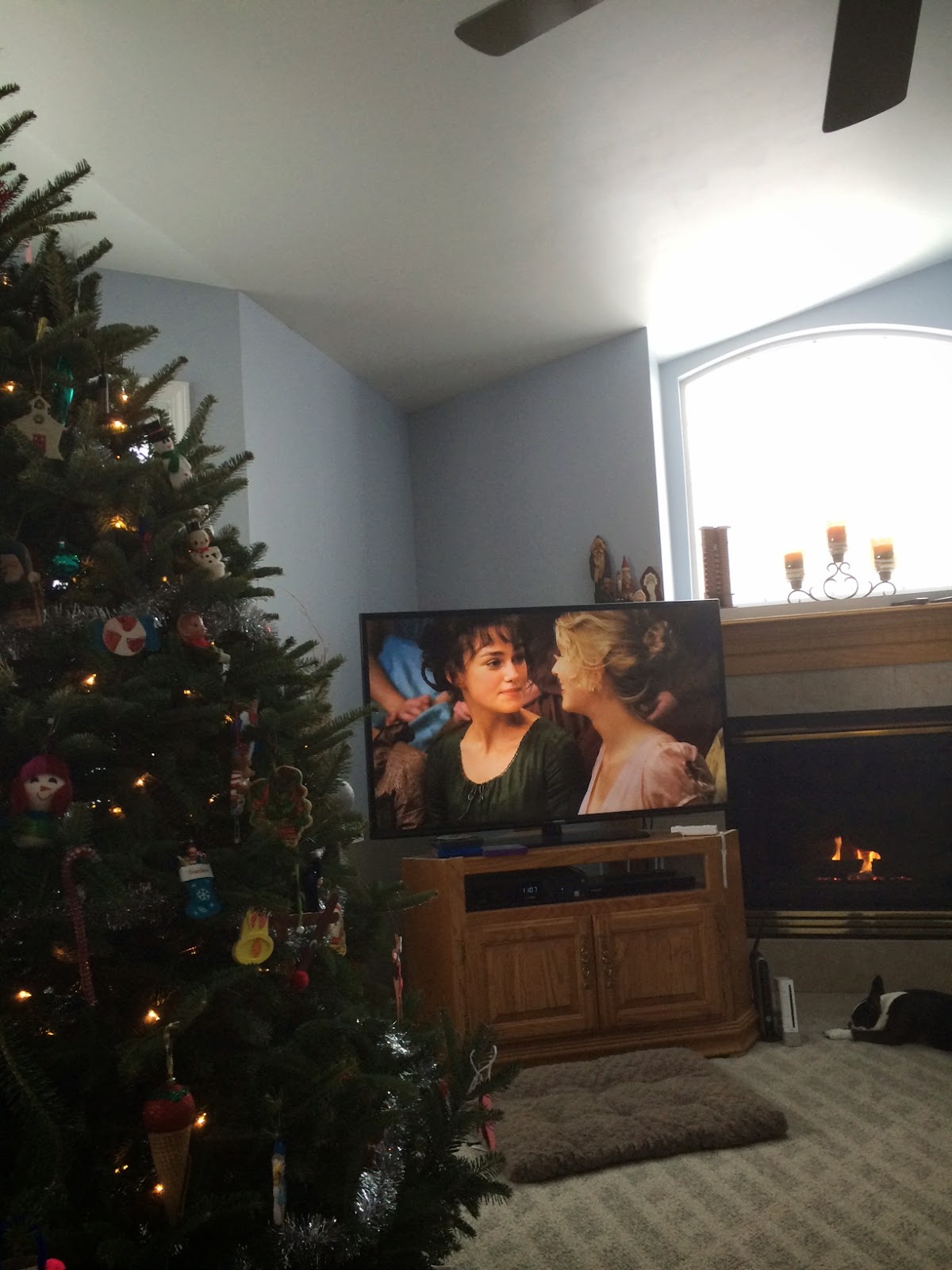
I love the novel Pride and Prejudice, and I love the 2005 movie adaptation of it equally which rarely happens for me. So you can imagine my excitement, when our unexpected snow day yielded the opportunity to watch it on HBO. I felt a little bit guilty at first because there were plenty of other things that I could be doing, but I just couldn't pull myself away. As I sat there watching, I also couldn't help but make some connections between the movie, teaching, learning and leading.

1) Perception may not be reality. First impressions can, and often are, misleading.
2) Try to view things from multiple perspectives. 
3) Take the time to get to know others, and to build relationships. 
4) Humility.
5) Open communication.
6) Learn from the challenges that come your way.